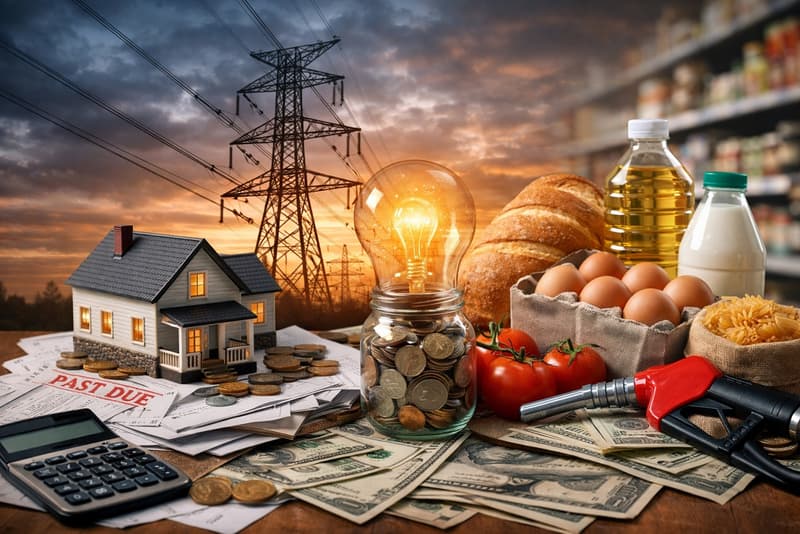
Rising housing, energy, and grocery costs have overtaken discretionary spending as the biggest drivers of financial pressure for Australian households [ABS, 2026].
For years, mainstream financial advice has often placed the blame for household budget blowouts squarely on lifestyle choices. The narrative was familiar: cut back on the daily takeaway coffees, skip the avocado toast, or downgrade the annual holiday, and financial security would follow.
But today, Australian families are facing a starkly different reality. Welcome to the "Essentials Economy", a financial landscape where unavoidable, recurring expenses are the primary source of household stress, forcing everyday people to rethink their budgets, savings, and long-term security.
The Big Three: Housing, Power, and the Supermarket Checkout
The current cost-of-living crisis is unique because it isn't driven by a sudden desire for luxury; it’s driven by the basic cost of surviving. The financial pressure points have centralised around three unignorable pillars:
• Housing: Whether you are renting or paying off a mortgage, keeping a roof over your head has become disproportionately expensive. Consecutive interest rate hikes have pushed mortgage repayments to historical highs for many, while a fiercely competitive rental market has sent weekly lease prices soaring, according to ABS, 2026; Reserve Bank of Australia, 2026.
• Energy and Utilities: Keeping the lights on and the house warm (or cool) is no longer a standard background expense. Global energy market fluctuations and domestic infrastructure costs have resulted in dramatic spikes in electricity and gas bills, causing "bill shock" to become a regular occurrence, as per the Australian Energy Regulator, 2026
• Groceries: The weekly supermarket run has become a source of anxiety. The price of fundamental staples, dairy, bread, fresh produce, and meat, has steadily climbed, meaning households are spending significantly more just to put the same basic meals on the table [ABS, 2026].
The Myth of Discretionary Spending
When the cost of necessities rises faster than wages, the buffer between income and expenses shrinks. For most Australians experiencing financial stress right now, the problem isn't that they are overspending on lifestyle; it’s that the cost of simply existing has absorbed their discretionary income.
This shift has a profound psychological impact. When you have already cut out restaurant dinners, streaming services, and weekend getaways, and you still find yourself struggling to reach the next payday, the resulting stress is heavy. It shifts the household focus from wealth accumulation to sheer preservation.
Rethinking Budgets and Long-Term Security
Because these expenses are largely unavoidable, Australians are being forced to adapt their long-term financial strategies. The traditional "set and forget" approach to household management is no longer viable. Instead, families are having to actively manoeuvre their finances just to maintain the status quo.
Savings goals, like a deposit for a first home, building a rainy-day fund, or contributing extra to superannuation, are frequently being paused to cover immediate essential bills [ABS, 2026].
Taking Back Control in the Essentials Economy
While you cannot control the broader economic forces driving up the cost of food or energy, there are still levers you can pull within your own household to reclaim a sense of control. Managing the Essentials Economy requires shifting from a passive consumer to an active financial manager.
1. Audit Your Recurring Bills: Not all essentials have fixed prices. Take the time to regularly compare providers for electricity, gas, and internet.
2. Review Your Policies: Insurance is a necessity, but loyalty taxes are real. Taking a closer look at your coverage, such as comparing your car insurance options, can reveal hidden savings without compromising your peace of mind.
3. Assess Your Baseline: You can't improve what you don't measure. Gaining a clear, honest overview of your current financial health is the first step toward reducing stress. Using resources like the Youi financial fitness calculator can help you pinpoint exactly where your money is going and identify realistic areas for adjustment.
Optimise the Grocery Shop: Lean into meal planning, switch to home brands for basic staples, and track sales cycles for non-perishable household items.
Conclusion
The Essentials Economy is undeniably challenging, but by shifting focus away from the guilt of "lifestyle spending" and taking a proactive approach to managing major unavoidable costs, Australian households can build resilience and find breathing room in even the tightest of budgets. Integrating reliable data sources and practical tools strengthens both awareness and confidence in navigating these pressures.